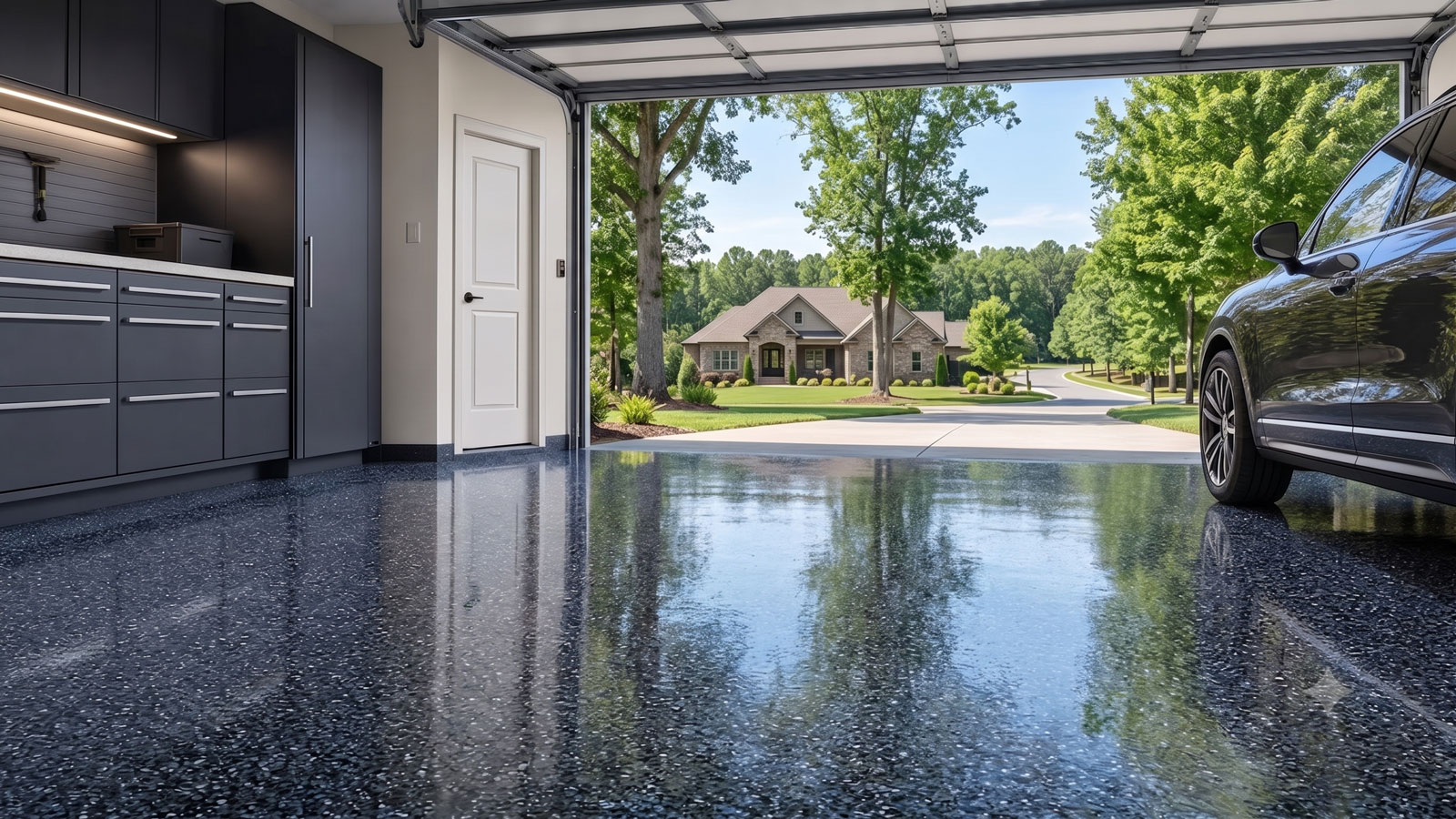
Garage Floor Coating in Claymont, DE
Floor Coating Services in Claymont, DE
Claymont is unincorporated New Castle County and one of the county's first Hometown Overlay redevelopment districts. Its former steel mill operated from 1916 until closure in 2014, and planning for its roughly 450-acre redevelopment has been followed by new infrastructure. The state opened the $90 million Claymont Transportation Center in December 2023, with more than 800 parking spaces. This shows building change, not chemical contamination or damage inside a private garage.
A WILMAPCO plan endorsed in July 2025 examines walking and transportation links between the town center, station, neighborhoods and parks. The Delaware River industrial-shore drainage context remains a public planning concern, not a moisture reading from residential concrete. Check whether a home's actual driveway or downspouts deliver water through the garage threshold.
An older Claymont garage may contain layered paint and oil; a newer addition can hold curing products. Mechanical grinding and repairs should follow actual condition. Decorative epoxy or polyaspartic may ease cleaning on sound concrete but cannot replace exterior drainage or stabilize movement. Require full layers, texture and cure instructions.
Local Market Insight
Claymont is an unincorporated New Castle County community; the county's Hometown Overlay designation and Claymont redevelopment design-guideline process establishes documented local development context, while Brandywine Hundred drainage, the Delaware River industrial shore and corridor stormwater planning is public environmental context—not evidence of private garage damage.
What Affects the Cost of Garage Floor Coating in Claymont?
Claymont's established worker-era streets and newer redevelopment sites have distinct garage configurations. The area's industrial redevelopment does not establish contamination on a residential slab. A quotation should instead identify any actual paint, automotive staining, curing treatment, cracks or worn edges before estimating preparation.
An older compact Claymont lot may limit grinding-equipment staging while a newer development garage offers a different approach. Public drainage and riverfront plans cannot substitute for checking a specific driveway slope and water marks. Separate site-water corrections from the floor coating scope.
- Building and slab histories: older established housing, renovated worker-era streets and newer redevelopment means garages can have different construction periods and layouts. The pour date and surface condition must be checked independently of the home.
- Old paint, epoxy and oil: Claymont's worker-era residential streets and newer redevelopment create different histories for garage finishes. Identify oil, older coatings or builder sealers on the specific slab, rather than projecting the former steel site's industrial history onto private concrete.
- Local water and threshold: Brandywine Hundred drainage, the Delaware River industrial shore and corridor stormwater planning is public geographic context. Check actual driveway grade, gutters, water marks and substrate moisture rather than infer private flooding.
- Cracks and surface strength: At an older Claymont driveway, damaged edges and repairs may need more attention than a later poured suburban slab. Record cracks, patch stability and movement before deciding which defects a coating system can cover.
- Access and garage configuration: Claymont's compact older streets may make equipment delivery and parking arrangements harder than at newer redevelopment lots. Quote the access and staging actually available, including steps, garage-door width and perimeter work.
- Finish, temperature and cure: For a Claymont garage receiving winter road residue or midday light at the door, evaluate cleanability and texture together. Installation weather, coating specifications and return-to-vehicle timing should be explicit, not assumed from marketing claims.
Call for a clear, project-specific estimate — or request one online.
Claymont's Development Records and What They Say About Garage Slabs
The former Claymont steel mill dates to 1916 and closed in 2014, with a redevelopment plan covering roughly 450 acres. Delaware opened the new $90 million Claymont Transportation Center for service in December 2023 with more than 800 parking spaces. A July 2025 WILMAPCO plan separately addresses pedestrian and community-center links. These project details show redevelopment phases; they do not prove contaminants in private garage floors. New Castle County identifies Claymont as one of the first two Hometown Overlay districts, alongside Hockessin, with separate redevelopment guidelines and design-review authority. Its former industrial and rail-corridor setting has prompted modern redevelopment around the historic core. the county's Hometown Overlay designation and Claymont redevelopment design-guideline process gives the homeowner a local planning and documentary baseline, but it does not assess concrete in a private garage. A floor can be younger than a historically designated house, or an apparently new garage can retain curing treatment that inhibits coating adhesion.
Consider older established housing, renovated worker-era streets and newer redevelopment. In those settings a garage may be attached, detached, used for equipment storage or rebuilt during a later renovation. An installer should ask about the history of the actual floor and inspect patches, paint, grease and cracks after stored items are moved. The year of a neighborhood's development does not determine slab moisture or whether old layers can bond.
Claymont's Hometown Overlay was one of New Castle County's first, reflecting a specific redevelopment and design process. Its older rail/industrial landscape and new infill projects can place older garage paint beside newer curing-agent concerns on different properties.
Claymont households should compare proposals on access to narrow or renovated garage layouts, removal of prior films and texture for wet winter shoes, with manufacturer-based curing.
Claymont's Brandywine Hundred drainage and Property-Level Water Entry
The local setting includes Brandywine Hundred drainage, the Delaware River industrial shore and corridor stormwater planning. Public agencies address those resources through planning, restoration, stormwater review and road development. Those are documented civic conditions, yet they cannot say whether rain reaches an overhead door or how damp the concrete at an individual address may be.
The Delaware River industrial shore and Brandywine Hundred drainage programs describe public land and water planning. They cannot identify moisture beneath a homeowner's garage; inspect the actual threshold and roof outlets.
Do not infer chemical contamination from Claymont's industrial heritage. Determine actual floor use, oils, paint and repairs before choosing grinding, and evaluate significant cracks separately.
Claymont renovation work may involve layered old finishes in former worker-housing garages. Evaluate texture for daily parking and plan the removal and cure schedule before the space is cleared.
Frequently Asked Questions
Does Claymont's planning history mean my garage slab is old?
No. the county's Hometown Overlay designation and Claymont redevelopment design-guideline process describes public development, but garages may be added, replaced or repoured independently of houses. Inspect actual coatings and concrete.
Does Brandywine Hundred drainage mean my garage is damp?
No. Claymont's riverfront redevelopment and watershed plans concern public infrastructure. They cannot establish whether a residential floor is damp; investigate downspouts, driveway fall, previous water entry and the slab itself.
Can epoxy correct stormwater flowing through the garage door?
A coating is not a substitute for correcting water entering a Claymont garage. Fix outside grading or drainage first and determine whether persistent moisture or damaged concrete makes the planned coating unsuitable.
Can old paint or new sealer be ignored?
Claymont's older houses and redeveloped lots may have very different coatings or sealers. Have a contractor inspect existing film, oil and slab soundness; adequate grinding and removal come before new decorative layers.
What should a Claymont coating quote include?
Ask for a breakdown of old-coating removal, profiling, repairs, edge work and the full coating schedule. On a narrow worker-era street, discuss where vehicles, waste and equipment can be staged during the job.
Claymont Neighborhoods & Local Context
Phone Quote Line
Discuss your garage, concrete condition, and a realistic project-specific estimate range.
(302) 202-0206Typical Project Cost
$3,000–$5,500
Typical range for a standard two-car garage. Final pricing depends on floor size, concrete condition, prep work, coating type, and finish options.
Helpful Guides
Other Service Areas