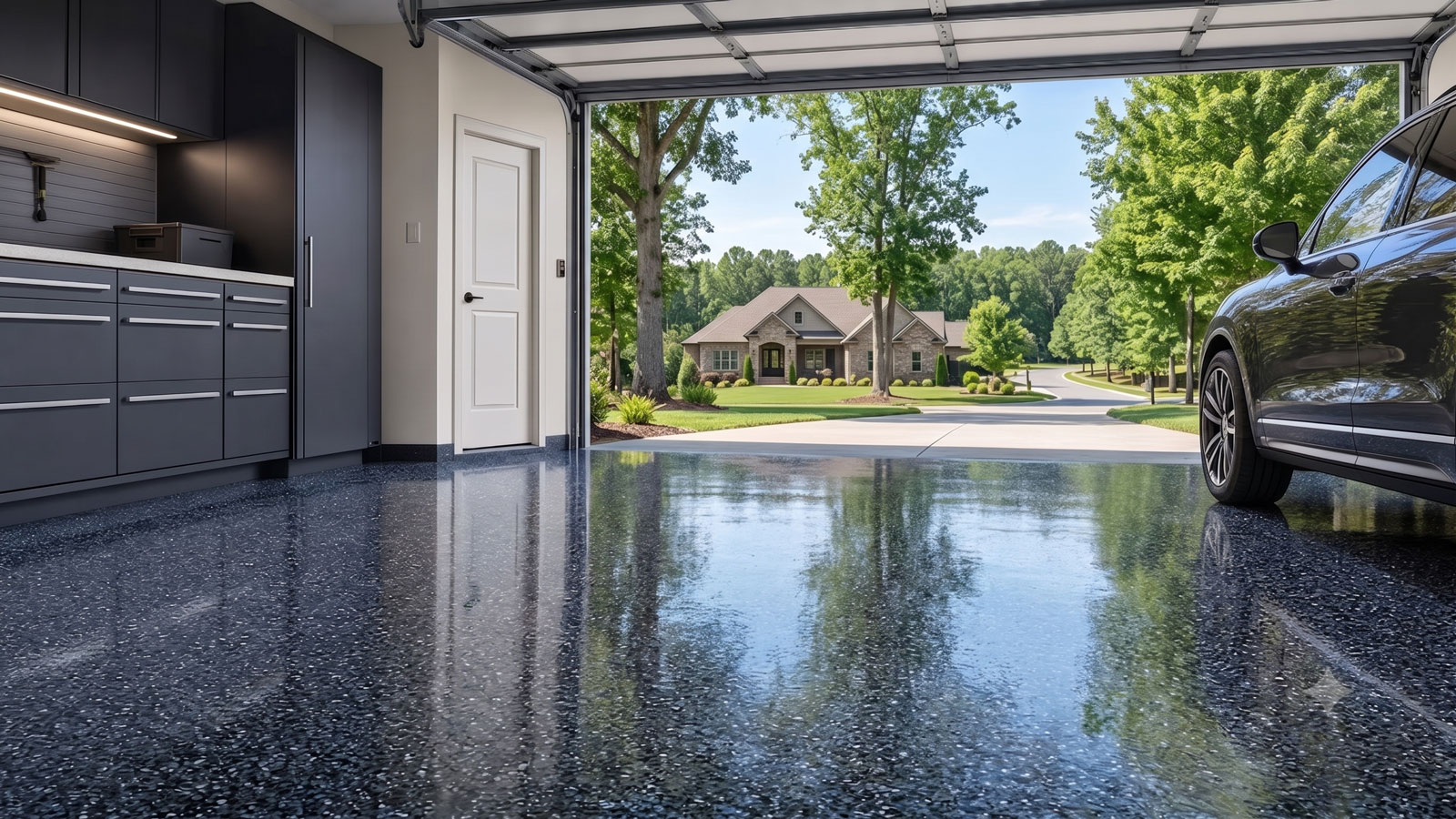
Garage Floor Coating in Bear, DE
Floor Coating Services in Bear, DE
Bear's residential development has followed the New Castle County Route 40 corridor, which DelDOT has monitored since its 2000 improvement plan. Its 2005 report counted 34 development applications, including two major, sixteen minor and sixteen resubdivision proposals. Current county records identify a proposed 26-lot Old Baltimore Pike neighborhood and changes near Bear–Christiana Road. These are different development phases, not evidence of a specific garage slab's age or defects.
WILMAPCO's Glasgow Avenue study addresses roughly 1.3 miles between US 40 and SR 896 after the bypass changed its traffic role. That planning and nearby stormwater design do not show whether runoff reaches a particular garage. A homeowner should inspect roof outlets, driveway slope and persistent concrete moisture separately from mapped corridor conditions.
Older Bear floors may contain paint, oil or past repair patches; new subdivision concrete can retain curing sealer. Epoxy, polyaspartic or flakes on sound ground concrete may improve cleanup, but cannot redirect water or repair moving joints. A detailed estimate identifies surface stripping, crack treatment, grinding, full layers, texture and vehicle-return conditions.
Local Market Insight
Bear is an unincorporated New Castle County community; DelDOT's Route 40 corridor monitoring report counted 34 submitted development plans in 2005; the Glasgow Avenue study covers about 1.3 miles between US 40 and SR 896 establishes documented local development context, while the Route 40 corridor's stormwater, subdivision drainage and road improvements around Glasgow is public environmental context—not evidence of private garage damage.
What Affects the Cost of Garage Floor Coating in Bear?
Bear has documented subdivision activity along Route 40 as well as older roads such as Old Baltimore Pike. Those different construction periods can produce garages with builder sealers, existing floor paint or later replacement slabs; neither neighborhood age nor square footage identifies what must be stripped.
Local corridor and stormwater plans provide useful background, but homeowners should check the actual grade toward the garage and any recurring wet floor. The estimate should account for mechanical preparation, stable crack repairs, access, edges and the household's vehicle-return schedule.
- Building and slab histories: US 40-area residential growth and earlier properties beside Old Baltimore Pike means garages can have different construction periods and layouts. The pour date and surface condition must be checked independently of the home.
- Old paint, epoxy and oil: Along Bear's Route 40 growth corridor, later subdivision garages can contain builder treatments, while older Old Baltimore Pike properties may have repainted or oil-stained surfaces. The quote should distinguish those conditions before surface grinding.
- Local water and threshold: the Route 40 corridor's stormwater, subdivision drainage and road improvements around Glasgow is public geographic context. Check actual driveway grade, gutters, water marks and substrate moisture rather than infer private flooding.
- Cracks and surface strength: Cracks and construction joints in Bear's varied subdivision-era and earlier garage slabs should be evaluated for movement. Price routine patching separately from serious deterioration or water-driven damage that requires correction.
- Access and garage configuration: Garage access off busy Route 40-area streets or within subdivision driveways affects where cars, grinding equipment and waste can be staged. Confirm doorway clearance and adjacent finished surfaces rather than assuming every lot is open.
- Finish, temperature and cure: For Bear's parking-heavy garage use, choose texture and coating layers after asking about winter vehicle residue, daily traffic and seasonal installation conditions. Make cure-time and manufacturer return-to-parking instructions part of the quote.
Call for a clear, project-specific estimate — or request one online.
Bear's Development Records and What They Say About Garage Slabs
DelDOT's Route 40 corridor monitoring report counted 34 development submissions in 2005—two major, 16 minor and 16 resubdivision plans. WILMAPCO's Glasgow Avenue Main Street study covers about 1.3 miles from US 40 to SR 896, noting changes after the bypass. County 2026 records also show a 26-lot Old Baltimore Pike proposal and Bear–Christiana Road redevelopment. These document layered development, not residential slab damage. County land-development records identify specific continuing change around Bear–Christiana Road and US 40. A 2026 Lincoln Center application included a proposed underground parking component; a separate Old Baltimore Pike application proposed a 26-lot pocket neighborhood. DelDOT's Route 40 corridor monitoring report counted 34 submitted development plans in 2005; the Glasgow Avenue study covers about 1.3 miles between US 40 and SR 896 gives the homeowner a local planning and documentary baseline, but it does not assess concrete in a private garage. A floor can be younger than a historically designated house, or an apparently new garage can retain curing treatment that inhibits coating adhesion.
Consider US 40-area residential growth and earlier properties beside Old Baltimore Pike. In those settings a garage may be attached, detached, used for equipment storage or rebuilt during a later renovation. An installer should ask about the history of the actual floor and inspect patches, paint, grease and cracks after stored items are moved. The year of a neighborhood's development does not determine slab moisture or whether old layers can bond.
Bear's US 40 growth corridor includes older roadside properties and ongoing infill. County records list a 26-lot Old Baltimore Pike pocket neighborhood and a 2026 Bear–Christiana Road redevelopment application; each suggests different garage construction periods without diagnosing any slab.
An estimate for a Bear garage should account for parking logistics near US 40, stored equipment and curing, alongside any actual drainage work that must remain outside decorative-finishing scope.
Bear's the Route 40 corridor's stormwater and Property-Level Water Entry
The local setting includes the Route 40 corridor's stormwater, subdivision drainage and road improvements around Glasgow. Public agencies address those resources through planning, restoration, stormwater review and road development. Those are documented civic conditions, yet they cannot say whether rain reaches an overhead door or how damp the concrete at an individual address may be.
DelDOT's Glasgow corridor study concerns 1.3 miles of public roadway and new neighborhoods, not whether water enters a residential garage. Check the actual driveway and gutters, especially where a site has been regraded during renovation.
Old highway-area workshop floors may have automotive oil, while a newer subdivision slab may retain sealer. Both require correct mechanical preparation; pouring on resin cannot overcome contaminated substrate.
On Bear's active US 40 residential corridor, work out alternate vehicle parking, door access and finish timing before approving the coating layers and the full cure window.
Frequently Asked Questions
Does Bear's planning history mean my garage slab is old?
No. DelDOT's Route 40 corridor monitoring report counted 34 submitted development plans in 2005; the Glasgow Avenue study covers about 1.3 miles between US 40 and SR 896 describes public development, but garages may be added, replaced or repoured independently of houses. Inspect actual coatings and concrete.
Does the Route 40 corridor's stormwater mean my garage is damp?
The Route 40 corridor's documented development and drainage planning cannot establish moisture under a particular Bear garage. Inspect the driveway slope, stormwater paths and persistent dampness on the individual slab.
Can epoxy correct stormwater flowing through the garage door?
No. If a Bear property's driveway channels stormwater toward the door, adjust drainage or the threshold independently of the finish. A decorative coating may ease cleaning but is not a flood barrier.
Can old paint or new sealer be ignored?
Newer Bear subdivisions can have concrete curing treatments; established garages can have oil and prior paint. Have the installer check and remove interfering films before profiling the substrate to the selected system's requirements.
What should a Bear coating quote include?
For a Bear quote, request a clear breakdown of coating removal, grinding, crack repair, edges, finish texture and return-to-service timing. Ask how work will be staged if subdivision parking rules or a busy driveway limit access.
Bear Neighborhoods & Local Context
Phone Quote Line
Discuss your garage, concrete condition, and a realistic project-specific estimate range.
(302) 202-0206Typical Project Cost
$3,000–$5,500
Typical range for a standard two-car garage. Final pricing depends on floor size, concrete condition, prep work, coating type, and finish options.
Helpful Guides
Other Service Areas